

“How do you say this in German/English/Spanish/French?”
“Since you study languages…”, “Since you work with languages…”
If you are involved in this field, you have likely heard these statements and their variants repeatedly.
The work of interpreters and translators does not always receive the recognition it deserves and, on closer inspection, one might argue that ‘expertise‘ should come before ‘recognition’‘.
Simply studying and understanding a language is not enough.
«Countries have gone to war because they’ve misinterpreted one another»
These words were spoken by Nicole Kidman as Silvia Broome in The Interpreter, a 2005 film.
«Countries went to war because they misunderstood each other» might sound like an exaggeration, but is it really?
Disinformation and neglect of the profession create a perilous mix, sometimes with catastrophic consequences.
In this article, we will explore some episodes that well describe the risks and consequences of relying on non-professionals, sometimes with ‘amusing’ results, but often with dire consequences.
Misinterpretations
The explosive word
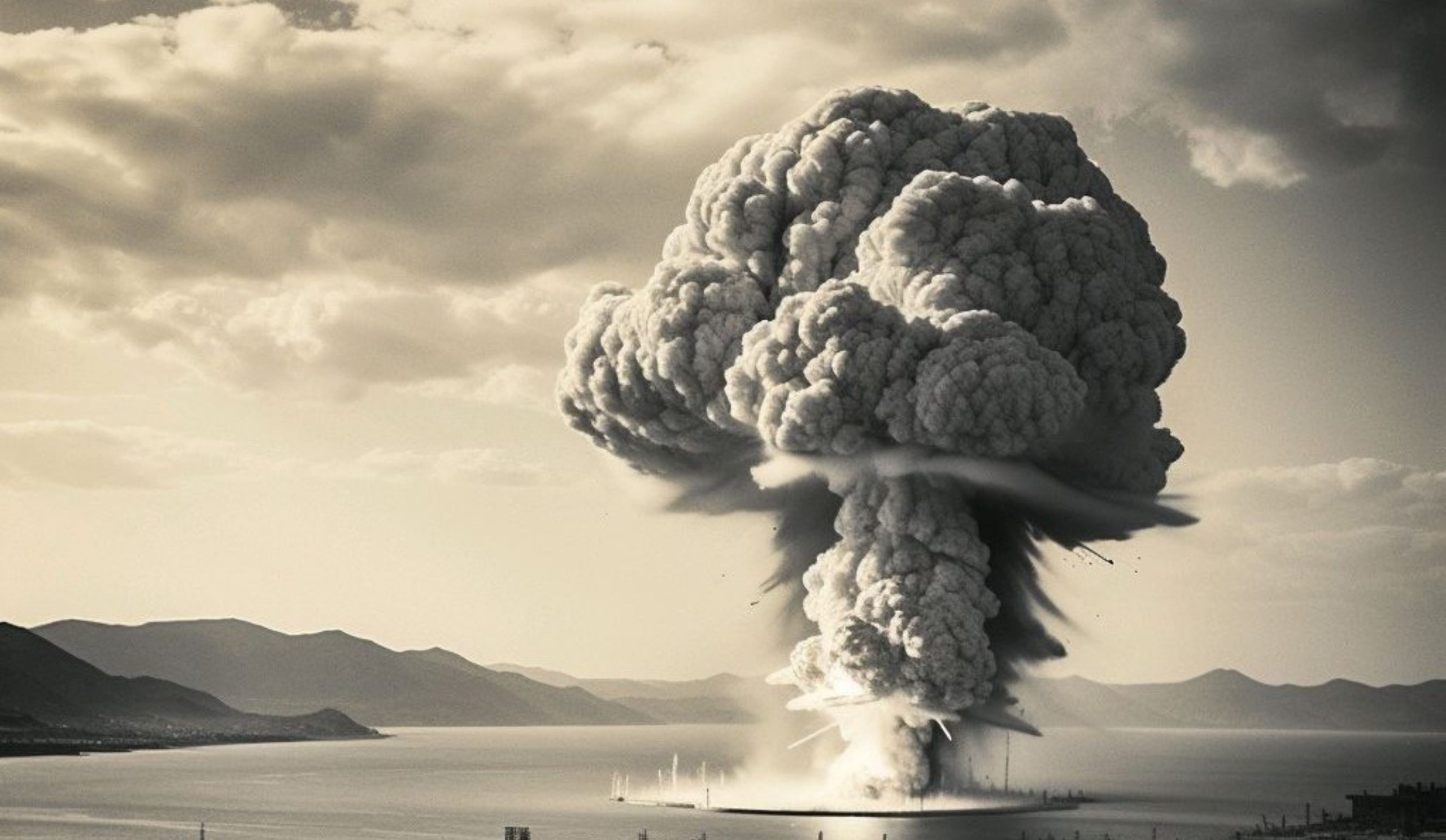
Let us begin with an ‘explosive‘ word: while there is no absolute certainty, the misinterpretation we are about to discuss may have contributed to the destruction of two cities: Hiroshima and Nagasaki.
In July 1945, as World War II was drawing to a close, the leaders of the Allied powers met in Potsdam to discuss their respective areas of influence in the aftermath of the conflict.
On this occasion an ultimatum was issued to Japan: surrender or face the complete destruction of the country.
Kantaro Suzuki, Prime Minister of the Land of the Rising Sun, was informed about this but chose to wait for an official communication before making any decision:
Although he did not yet have a definitive answer, he attended a press conference where he was asked about the future of the country.
His reply was memorable: ‘Mokusatsu‘.
It is a word that has gone down in history and is known among linguists for its consequences. In Japanese ‘Mokusatsu‘ has two meanings: one is ‘to regard with contempt, not deem worthy of attention: to ignore’, while the other is similar to the English ‘No comment‘.
In a short time, the answer spread worldwide and news agencies began to give it the first interpretation.
American newspapers thus reported that Japan had ignored and disregarded the Postdam declaration.
People in the United States were particularly outraged by this, to the extent that it led to the decision to raze Hiroshima to the ground on 6 August 1945 and, three days later, Nagasaki as well.
It is unclear who was responsible for that particular translation; yet, much debate surrounds the person accountable for this catastrophe.
The ideal choice would have been to clarify that that short Japanese word actually conceals several nuances of meaning. On his part, Suzuki could have chosen a less ambiguous answer.
This is just one example – albeit a tragic one – not necessarily of the incompetence of an interpreter (whose identity remains in fact unknown), but of the weight each word carries, and how finding an exact equivalent in the target language is not always possible.
Bulky gifts: three Siberian tigers

What would you do if three Siberian tigers were unexpectedly delivered to your doorstep?
June 2009: Vladimir Kirillow, responsible for the supervision of natural resources in Russia, is in South Korea. He is leading the Russian delegation on an official visit, accompanied by the Korean Deputy Environment Minister, Lee Byungwook.
What looks like a routine international political meeting suddenly takes an unexpected turn. What could possibly happen?
During a visit to the National Institute of Biological Resources in Seoul, Kirillow notices a Siberian tiger among other stuffed animals.
It is a rare feline that survives mostly in the wild in eastern Russia, but in captivity in Korea.
A light-hearted exchange turned into a major misunderstanding when a Korean representative expressed his country’s interest in Siberian tigers. However, the deputy minister’s interpreter did not literally translate the question addressed to Kirillow, to whom he asked instead whether Russia was willing to donate a few tigers.
The latter, in response, inquired if breeding Siberian tigers was possible in Korea, without keeping them in captivity.
What seemed to the Koreans like casual jokes and mere conversation was actually something else: upon returning home, Kirillow reported the request to President Putin.
So it was that, within days, Russia informed South Korea of a valuable gift on its way: three rare Siberian tigers.
These mistakes prompt a crucial question: can we really afford to underestimate the importance of precise translation and interpretation?
In the next article we will explore the highly sensitive medical field, where even a single error can make all the difference.
